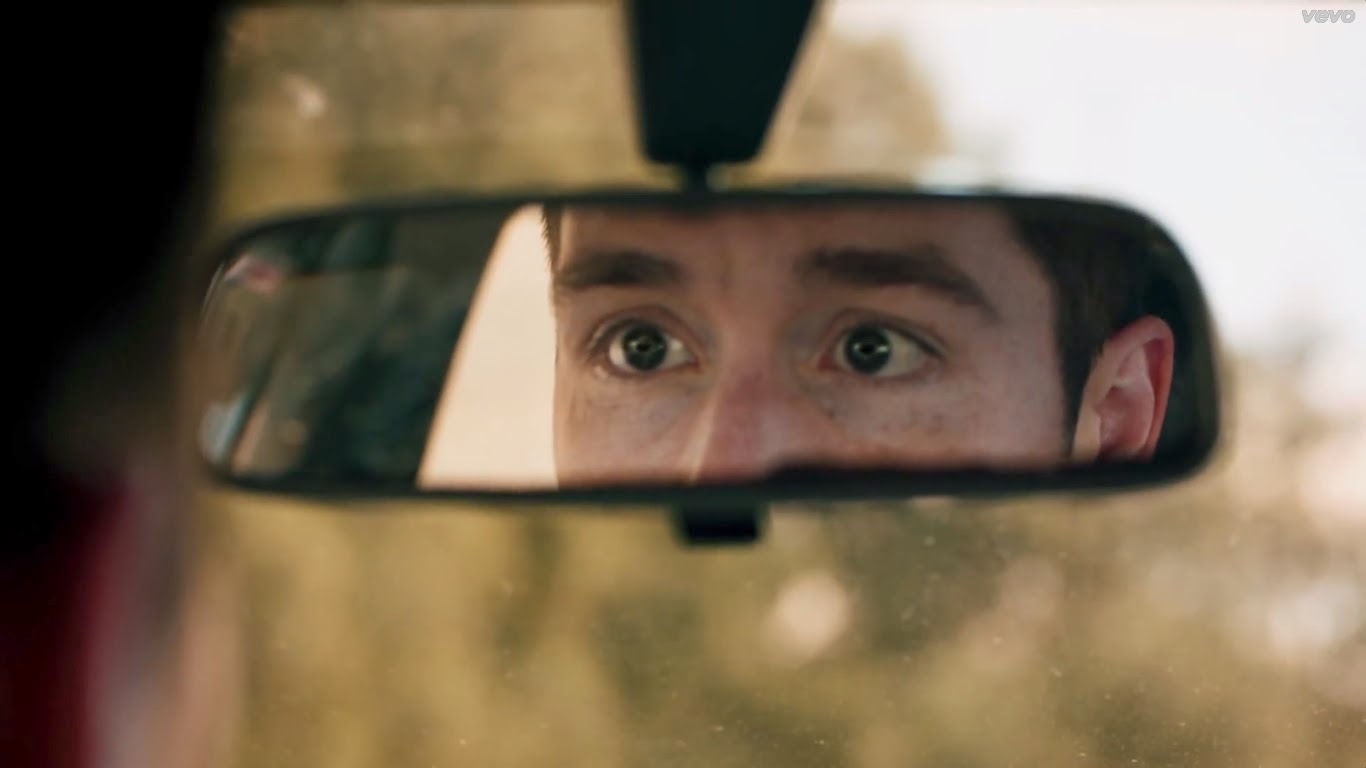
The song was catchy, and that was all. Then I watched the music video, and it seemed weird, but somehow meaningful. I did some research and all interpretations were intriguing. I couldn’t get the song and video out of my head. In their popular song, “Pompeii,” the English alternative rock band Bastille had gripped my attention by a song that resonates with human experience. The music video begins with Bastille front man Dan Smith on top of a building overlooking the city of Los Angeles with glazed eyes. He walks through streets littered by trash and grime. He encounters people who seem soulless. Their eyes are black pits, which seems to point to lives empty of vitality and meaning, pitifully wasting away. Smith’s character begins running. A panic hits him to try to escape the city. He makes it to the desert, only to discover his own eyes being blackened as he looks in the rearview mirror. The sickness caught him too. He ascends into the beautiful mountains only to be overcome with the same soul-emptiness signified by his now fully black eyes.
In interviews, Dan Smith says the inspiration for “Pompeii” is imagining a conversation between two people being buried by the lava in the historic eruption of Mt. Vesuvius in 79 A.D. Merely listening to the song might allow someone to only picture the historic Pompeii, but in the music video, Smith clearly brings the significance of a city’s destruction to present day.Smith says he likes the historic stories because they resonate. “When I’m writing, I want the songs to be good—and memorable—but also to have a level of depth to them as well, and thought that goes into them.” Smith cares about his lyrics. Starting with a classic story, he gives depth of meaning and metaphors for what we experience in our world, such as the encounter with hedonism as told in “Icarus.” Bastille isn’t a shallow pop band. The music is popular worldwide, but the meaning and thought behind the songs is profound, often ironically contrary to the crowds dancing to them. Dan Smith is a thinker, and many of his other songs and music videos also reveal a gloomy reality. Every song on Bastille’s breakout album Bad Blood acknowledges human depravity. From “Flaws,” “Icarus” and “Pompeii” to “Bad Blood,” “Things We Lost in the Fire” and “Weight of Living,” the band feels the brokenness and pain of the world in which we live. The somber realism is revealed openly by even the song titles themselves, but deceptively concealed in catchy rhythms and tasteful melodies. Last October, Bastille released another song displaying the painfulness of reality. Though it is a mashup of two 90s dance songs, “Of the Night” by Bastille is shockingly somber. The music video for “Of the Night” is maximally depressing. Tracking a crime scene investigator through numerous scenes of homicide and suicide, the artistic work portrays a message of gloom in reality and interprets “night” both literally and figuratively. Dan Smith has a deep grasp that this world is dark, painful, bleak. “Of the Night” ends with the protagonist sitting in his own blood, a gruesome picture of another victim and leaving the viewer with a message of hopelessness. You can’t escape the rhythm of this world, of the night. Smith’s outlook on life resonates with me. I want to think we’re getting better at being humans—that is what the Enlightenment taught us—but I keep seeing destruction around me. We are so deeply selfish as human beings, and we ultimately find the problems we face in our world to be, yes, partly our doing. We cannot escape our own selves.
Oh where do we begin? The rubble or our sins?
Smith’s question surprised me when I heard his mention of sin. The term isn’t popular today. Most people think of picketers holding signs against homosexuality. Or if you’ve grown up in the church, you could think of how you’re not supposed to drink, smoke or chew or hang out with those who do. For me getting a degree in theology, the study of sin (hamartiology) is one of the richest topics. Whether you call it inherited dysfunction or original sin or collective insanity or maya or dukkha, something reigns in our being that isn’t pleasant, loving or generous.

Smith sees problems and destruction in his world. Our modern-day “Pompeii” is plagued by being “caught up and lost in all our vices.” If you descend and look at the streets, they’re littered by trash and inhabited by people wasting their lives unawares. We’re self-destructive. Dan Smith offers two starting points to work against the problems: clean up the rubble or attack our sins. Anyone thinking deeply about his question would see that he is pointing to sin as the root cause. The rubble comes from our sin, and we cannot clean up the trash and help the soullessness if we are corrupted. The significance of the black eyes in media normally points to demon-possession, a sort of loss of humanity as the soul is overtaken by an evil force. I interpret Smith to be showing how inescapable human selfishness is. Even if we do try to fix our sin as a root cause for the destructive eruption, we’ll find we cannot escape ourselves.
How am I gonna be an optimist about this?
In “Pompeii,” Bastille sings a request for optimism, a question asking for any hope in the midst of such gloomy circumstances. My initial response is to fight for optimism and not despair. The world’s not that bad, Smith! But the correct answer to the song’s central question might be, “don’t.”

Don’t be an optimist about this. We are completely selfish leading to self-destruction. Sin is pervasive, corrosive and ruinous. Pompeii doesn’t stand a chance, because we’re all part of the problem. Even if we think we’ll escape the lava and burning ash in the city of vice, we will still lose our souls to the internal pandemic. Our human race is individually and collectively wretched. But God, who is rich in mercy, made us alive in Christ even when we were still dead in our transgressions. The great transition in one of my favorite chapters of the Bible, Ephesians 2, comes with the astonishing involvement of God in a bleak situation. The author Paul has acknowledged that we were all dead in our trespasses and sins, completely without hope. But God. Like the sun breaking through the clouds after a long thunderstorm or the first buds of green after a dreary winter, the two simple words show the only way I can “be an optimist” about this world. I don’t mean to overly spiritualize a pop music video or smack condemnation from the Bible, but for me, this truly is the only source of hope. I’m only 25 years old, but like Dan Smith, I profoundly connect with stories illustrating the death and destruction we find on the earth. The best answers I’ve found have been in the Bible: The heart is deceitful above all things and desperately sick. Who can understand it? Jeremiah 17:9There is no one righteous, not even one; there is no one who understands, no one who seeks God. All have turned away, they have together become worthless; there is no one who does good, not even one. Romans 3:10-12Only in Christianity have I found an adequate explanation for the pain we experience in life and an infinitely marvelous solution—that God Almighty, the Creator and Sustainer of the universe, would send His only Son out of His infinite love for us, and save us. How do you save Bastille’s Pompeii while “great clouds roll over the hills bringing darkness from above”? How do we save ourselves from our own devices? How do we escape a society where we are “caught up and lost in all of our vices”? Look for intervention from a source outside ourselves. The transcendent God who made us became one of us that he might save us—save us from spiritual death, from pervasive sin, from eternal punishment. Wow. God is good. For God so loved the world that He gave His only Son, that whoever believes in Him should not perish but have eternal life. For God did not send His Son into the world to condemn the world, but in order that the world might be saved through Him. John 3:16-17